
Introduction: When Speech Issues Point to Deeper Issues
Your 2-year-old does not speak the same way other children do at that age. Your family tells you “Do not worry; they will catch up,” yet you have observed that they do not point, do not make eye contact, and are fascinated more by things than by people. So, is this a speech delay or something else?
Speech delay vs autism is one of the most common, as well as the most confusing questions for parents out there. While similar, speech delay and autism require completely different types of interventions. Knowing the differences between them will allow you to be a better advocate for your child.
In this article, we will discuss the differences between speech delay and autism, their similarities, and when you need to consult a professional.
What is Speech Delay?
Speech delay can be characterized by a child not meeting the normal milestones for the acquisition of speech. Such characteristics include:
- Less use of words
- The inability to form sentences from words
- Problems with certain sounds
- Difficult to understand speech
Common Speech Delay Milestones
| Age | Typical Speech Development |
| 12 months | Says 1–2 words like “mama,” “papa,” “dada” |
| 18 months | Uses 10–20 words, points to communicate, says “pani” (water), “khaana” (food) |
| 24 months | 50+ words, combines two words like “aur doodh” (more milk), “mummy aa” (mommy come) |
| 36 months | Uses 3–4 word sentences like “mummy bahar jaana” (mommy want to go outside), speech is 75% understandable |
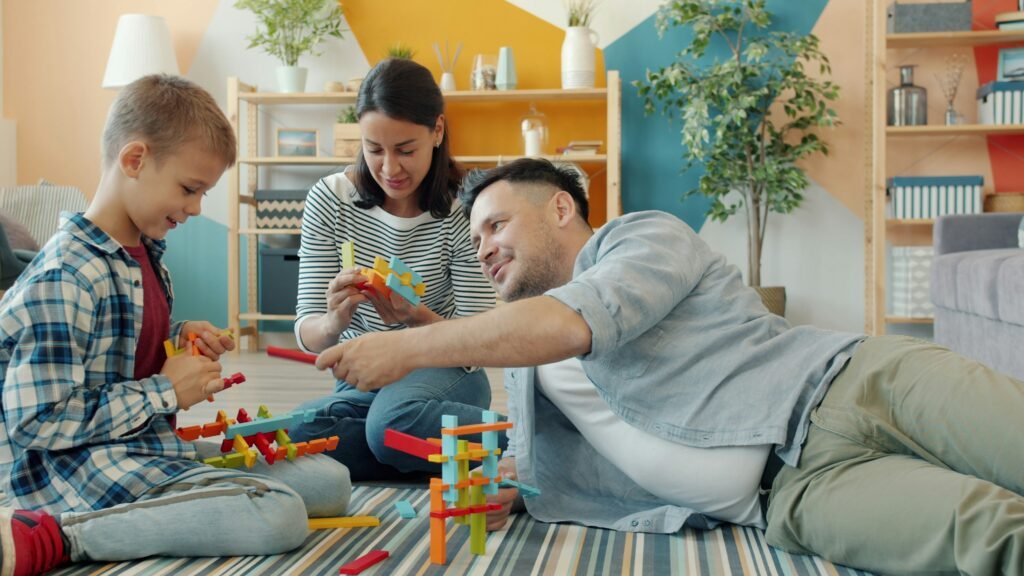
Important: The child suffering from speech delay has good social skills: he/she looks into your eyes, points at things to share attention, answers when being called, and likes interactive games.
What is Autism Spectrum Disorder (ASD)?
Autism Spectrum Disorder (ASD) is a developmental disorder affecting:
- Social communication (eye contact, gestures, speech)
- Social interaction (playing with others, sharing interests)
- Behavior patterns (repetitive movements, insistence on sameness, restricted range of interests)
Autism is called “spectrum” because of different levels of severity and functioning. Some children require substantial help, others are relatively independent.
Differences in Social Communication in ASD Children
Children with autism have:
- Limited or absence of eye contact
- Failure to answer to their names
- Failure to point and use gestures to communicate
- No attempts to share interests and accomplishments with other people
- Preference to play alone
- Difficulty to understand or use social cues
Speech Delay vs Autism: Key Differences
While both conditions involve communication challenges, there are important distinctions:
1. Social Engagement
| Speech Delay | Autism |
| Makes good eye contact | Limited or avoids eye contact |
| Points to show you things, says “dekho” (look) | Doesn’t point or share interests |
| Responds to name consistently | Often doesn’t respond to name |
| Enjoys interactive games (peek-a-boo, pat-a-cake) | May not engage in social games |
| Tries to get your attention, says “mummy dekho” | Seems unaware of others’ presence |
2. Non-Verbal Communication
| Speech Delay | Autism |
| Uses gestures (pointing, waving, reaching), says “bye-bye” with hand wave | Limited or no use of gestures |
| Brings toys to show you, says “mummy lo” (mommy take this) | Doesn’t share or show objects |
| Follows your gaze or point | Doesn’t follow your gaze or point |
| Facial expressions match emotions | Limited or unusual facial expressions |
3. Play Skills
| Speech Delay | Autism |
| Engages in pretend play (feeding dolls, talking on phone), says “khana khao” (eat food) | Limited or no pretend play |
| Plays with toys functionally (cars roll, blocks stack), says “gaadi chalo” (car go) | Lines up toys, spins wheels, uses toys unusually |
| Interested in playing with other children, says “aao khelte hain” (let’s play) | Prefers solitary play, ignores peers |
4. Speech Patterns
| Speech Delay | Autism |
| Speech is delayed but follows typical patterns | Unusual speech patterns (robotic, sing-song, monotone) |
| Uses words meaningfully, says “bhook lagi” (I’m hungry) | May repeat words/phrases without meaning (echolalia), repeats TV dialogues |
| Tries to communicate despite limited words, says “pani pi” (drink water) | May not attempt to communicate needs |
5. Behavior and Flexibility
| Speech Delay | Autism |
| Adapts to changes in routine | Extreme distress over minor changes |
| Some repetitive behaviors are normal | Intense repetitive movements (hand flapping, rocking, spinning) |
| Typical sensory responses | Strong reactions to sounds, textures, lights, or smells |
Leave a Reply