
What Is Dyslexia?
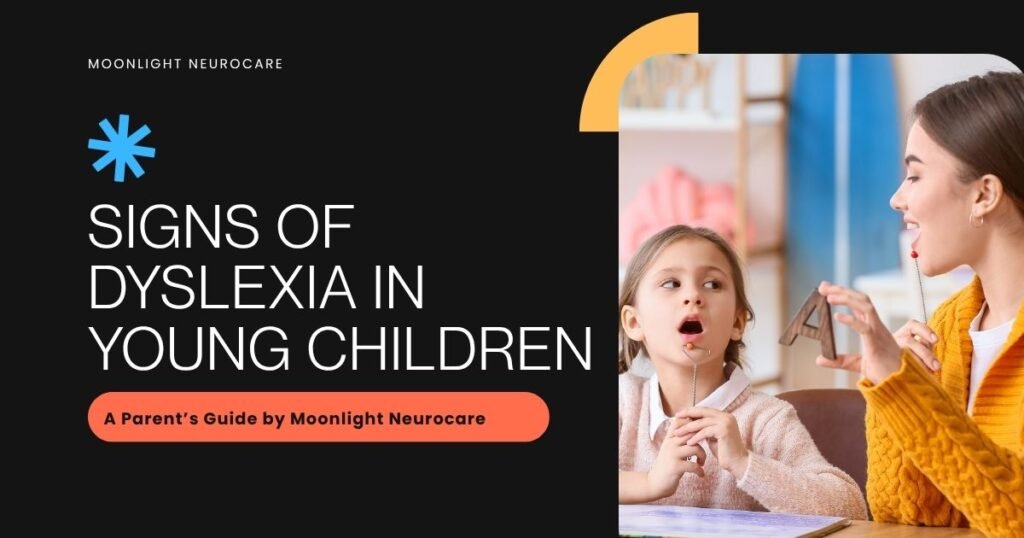
Dyslexia is a specific learning difficulty that mainly affects reading, spelling, and the ability to connect letters with sounds. It is linked to the way the brain processes written and spoken language. Dyslexia is not caused by low intelligence, laziness, poor parenting, or a lack of effort.
A child with dyslexia may be bright, creative, curious, and good at explaining ideas verbally, while finding reading and writing unusually difficult. Every child experiences dyslexia differently, and signs can change as learning demands increase.
Dyslexia is often noticed after formal reading instruction begins, but early clues may appear during the preschool years. These clues can include difficulty learning rhymes, remembering letter names, recognising sounds in words, or following sequences.
Dyslexia and Speech or Language Difficulties
Dyslexia is primarily linked to literacy, but some children may also have speech or language difficulties. For example, a child may:
- Take longer to learn new words.
- Find long words difficult to pronounce.
- Mix up sounds in words.
- Struggle to remember the right word.
- Have difficulty recognising rhyming words.
- Find it hard to follow multi-step instructions.
These signs do not automatically mean a child has dyslexia. Speech delay, hearing difficulties, developmental language disorder, attention difficulties, and other learning needs can look similar. A proper assessment is needed to understand the reason behind a child’s difficulties.
Early Signs Before School
Some early signs may appear between the ages of 3 and 5, before a child starts formal reading lessons. Parents may notice that their child:
- Has difficulty learning nursery rhymes.
- Cannot easily identify words that rhyme, such as “cat” and “hat.”
- Struggles to clap or count syllables in words.
- Finds it difficult to remember letters and numbers.
- Mixes up similar-sounding words.
- Has trouble pronouncing longer words.
- Finds it difficult to learn the alphabet song.
- Struggles to remember familiar sequences.
- Avoids books or loses interest during story time.
- Has difficulty learning the first sounds in words.
For example, your child may know that a picture shows a banana, but struggle to say the word clearly or remember its first sound. Another child may enjoy listening to stories but find it difficult to recognise their own name in print.
Occasional mistakes are common in young children. The concern becomes stronger when difficulties are persistent, occur in several areas, and continue despite regular teaching and practice.
Dyslexia in Early School Years
Once children begin learning to read and write, signs may become more noticeable. A child may:
- Struggle to learn letter names and sounds.
- Find it difficult to blend sounds, such as /c/ /a/ /t/ into “cat.”
- Read slowly and with considerable effort.
- Guess words instead of sounding them out.
- Leave out, add, or change sounds while reading.
- Confuse the order of letters in words.
- Spell the same word differently each time.
- Find common words difficult to remember.
- Avoid reading aloud.
- Become tired, upset, or anxious during reading and writing tasks.
Some children may answer questions confidently when speaking but struggle to write their answers. This difference can be confusing for parents and teachers, but it does not mean the child is careless. Written language may simply require much more effort.
Letter Reversals: Should Parents Be Concerned?
Many young children occasionally write letters or numbers backwards. Reversing b and d, or writing a number in the wrong direction, can be part of early learning.
Letter reversals alone do not confirm dyslexia. Parents should consider the wider pattern, including:
- Difficulty learning letter sounds.
- Ongoing problems blending sounds.
- Slow progress in reading.
- Inconsistent spelling.
- Difficulty remembering familiar words.
- Problems following sequences or instructions.
If these difficulties continue after the child has received suitable reading instruction, speak with the school and a qualified professional.
How Dyslexia Can Affect Daily Life
Dyslexia may affect more than reading lessons. A child may have difficulty:
- Remembering the days of the week.
- Learning the alphabet in order.
- Following instructions with several steps.
- Remembering left and right.
- Copying words from the board.
- Organising books or school materials.
- Finishing written work within the expected time.
- Remembering spelling rules.
- Recalling names quickly.
These challenges can affect confidence. A child may say, “I don’t like reading,” avoid homework, or become upset before school. This behaviour may reflect frustration rather than a lack of interest in learning.
Dyslexia Is Not a Sign of Low Intelligence
One of the most important things parents should know is that dyslexia does not determine intelligence. Children with dyslexia may have strong skills in:
- Creative thinking.
- Problem-solving.
- Building and design.
- Art and music.
- Storytelling.
- Understanding ideas through conversation.
- Thinking about the bigger picture.
When reading and writing are difficult, children may need different teaching methods and appropriate support. Their strengths should be recognised alongside their learning needs.
When Should Parents Seek Help?
Consider seeking guidance if your child has persistent difficulty with several of the following:
- Learning letter names and sounds.
- Understanding rhymes.
- Remembering new words.
- Speaking longer words clearly.
- Following sequences.
- Blending sounds to read words.
- Spelling familiar words.
- Reading at a pace similar to classmates.
- Completing written work.
- Participating in reading activities.
You do not need to wait until your child is failing at school. Early discussion with the class teacher, special educator, speech-language therapist, educational psychologist, or developmental professional can help identify the right next step.
A professional may recommend checking:
- Hearing and vision.
- Speech and language skills.
- Phonological awareness.
- Memory and processing skills.
- Reading and spelling abilities.
- Attention and classroom participation.
- Educational needs and learning environment.
How Is Dyslexia Supported?
Dyslexia is not treated with one quick exercise or a single product. Children usually benefit from structured, systematic, and explicit literacy teaching. Support may focus on:
- Letter-sound relationships.
- Phonological awareness.
- Sound blending and segmenting.
- Word reading.
- Spelling patterns.
- Reading fluency.
- Vocabulary and comprehension.
- Writing and organisation.
A child may also benefit from classroom accommodations, such as extra time, audiobooks, oral responses, reduced copying demands, and access to clear learning materials.
Support should be based on the child’s individual assessment rather than a general assumption about dyslexia.
What Can Parents Do at Home?
Parents can support learning without turning every evening into a lesson.
Read Together
Read aloud regularly and talk about the story. Ask questions such as:
- “What do you think will happen next?”
- “Why is the character happy?”
- “Can you find a word that sounds like ‘day’?”
Play With Sounds
Try simple games with rhyming words, syllables, and beginning sounds:
- “What rhymes with sun?”
- “Clap the parts in ba-na-na.”
- “What sound do you hear at the beginning of ‘ball’?”
Keep Practice Short
Short, regular practice is often more effective than long sessions that leave the child tired or upset.
Praise Effort
Say, “You worked hard on that word,” rather than focusing only on whether the answer was correct.
Use the Child’s Strengths
If your child enjoys drawing, let them illustrate a story. If they enjoy building, use blocks to practise letter shapes, sounds, or simple word cards.
Dyslexia, Speech Therapy, and Special Education
A speech-language therapist may support children who have difficulties with speech sounds, vocabulary, listening, phonological awareness, or language organisation. These skills can be closely connected to reading and spelling.
A special educator may provide structured academic support, while an educational psychologist may assess learning patterns and recommend appropriate accommodations.
At Moonlight Neurocare, families can explore child-focused support for speech and language development, learning needs, occupational therapy, and special education. If you are concerned about your child’s reading, writing, speech, or learning progress, a professional discussion can help clarify which assessment or service may be appropriate.
Final Thoughts
Dyslexia is not a reflection of a child’s intelligence or effort. The earlier a child’s learning needs are understood, the sooner parents and teachers can provide the right support.
If your child is struggling with reading, spelling, sounds, or language, avoid comparisons and blame. Observe the pattern, speak with the school, and seek guidance from an appropriately qualified professional.
FAQs
Dyslexia is a learning difficulty that mainly affects accurate and fluent reading, spelling, decoding, and the connection between letters and sounds.
Early signs can appear before formal reading begins, but a clear dyslexia evaluation may be more reliable after a child has received formal reading instruction. Early concerns should still be discussed rather than ignored.
No. Dyslexia affects literacy skills, not intelligence. Many children with dyslexia have strong verbal, creative, practical, or problem-solving abilities.
No. Some children with speech or language difficulties later experience reading challenges, but speech delay does not automatically mean dyslexia.
Dyslexia is a long-term learning difference, but structured teaching and suitable support can help children develop stronger reading, spelling, and learning strategies.
Speak with a professional if your child continues to struggle with sounds, rhymes, letters, reading, spelling, or written work despite regular instruction and practice.
Visit: Moonlight Neurocare
Contact: +91 7982282025
Leave a Reply